
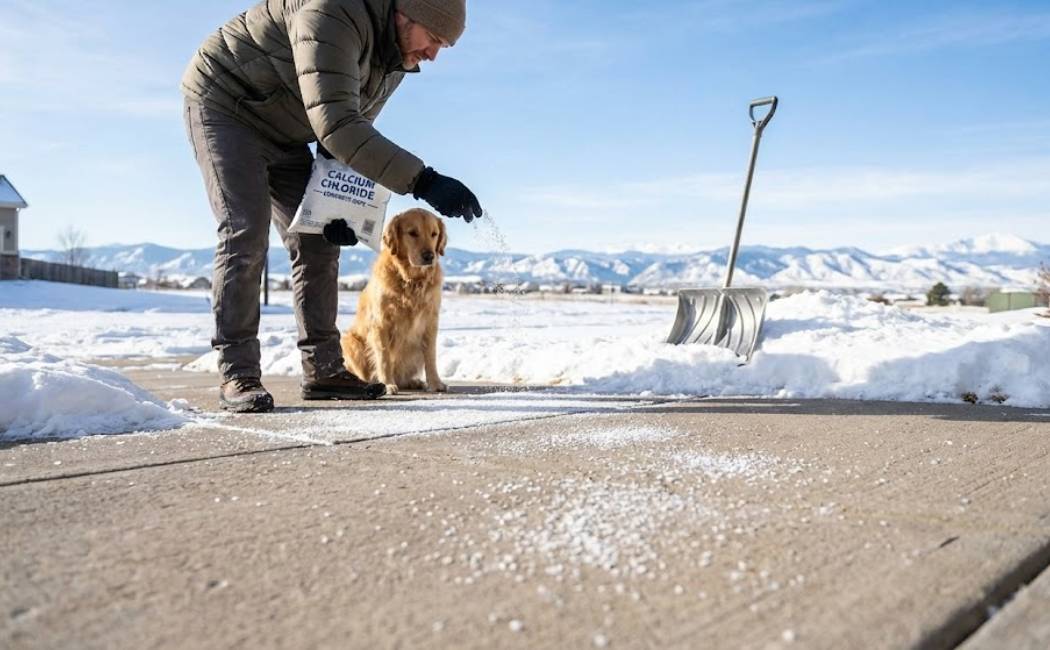
Colorado winters are stunning, but they also have big temperature swings. This leads to tough freeze–thaw cycles. These cycles put constant pressure on concrete surfaces around homes and businesses. Using the wrong de-icer can lead to melting and refreezing. This can cause pitting, scaling, cracking, and long-term damage to structures. Proper winter care is closely linked to effective long-term concrete maintenance. Many people don’t realise just how strong this connection is.

Using concrete-safe products does more than keep walkways clear. It also protects your property investment. Best Concrete Service CO always suggests safe, tested, and concrete-friendly choices. These help property owners in Colorado prevent unnecessary winter damage. Choosing products wisely today can save you thousands in repairs down the road.
Understanding How De-Icers Affect Concrete
Freeze–Thaw Stress Explained
When snow melts and water seeps into tiny pores in your concrete, it freezes again as temperatures drop. Frozen water expands by roughly 9%, and that expansion creates internal pressure. Repeated freeze–thaw stress eventually fractures the concrete surface, leading to scaling and cracking.
How Chlorides Break Down Concrete Surfaces
Many de-icers use chloride-based chemicals such as sodium chloride and magnesium chloride. Chlorides attract moisture, which allows water to penetrate even deeper into the concrete. Over time, they weaken the paste that binds concrete together, accelerate cracking, and can even corrode rebar in reinforced slabs.
Why Newly Poured Concrete Is at Higher Risk
Concrete that is less than a year old has higher permeability. Its pores are not fully sealed, making it extremely vulnerable to water and chemical intrusion. Using harsh de-icers on new concrete is one of the most common causes of premature surface failure.
Both homeowners and business owners can avoid unnecessary damage by adopting the winter care strategies that Best Concrete Service CO recommends for safe, practical, and effective protection.
Rock Salt (Sodium Chloride): Pros, Cons & Risks
When Rock Salt Works
Rock salt is affordable, widely available, and works well at temperatures down to about 20°F. It’s often used for quick, basic ice control on roads and large open areas.
Hidden Damage to Driveways & Sidewalks
Despite its cost-effectiveness, rock salt is a major contributor to surface scaling. It pulls moisture into the concrete, refreezes inside the slab, and accelerates deterioration. Over time, driveways and sidewalks treated with rock salt develop pits, cracks, and rough textures.
Why It’s Not Ideal for Long-Term Concrete Maintenance
Using rock salt regularly will shorten the lifespan of your concrete. In Colorado’s climate, where freeze–thaw cycles can happen multiple times per week it’s especially risky. Rock salt may melt ice quickly, but it isn’t worth the long-term damage.
Calcium Chloride: The Most Concrete-Friendly Option
Why Calcium Chloride Is Considered Safer
Calcium chloride is widely recognized as one of the safest chloride-based de-icers for concrete because it works quickly at much lower temperatures (down to –25°F) and doesn’t require as much product to melt ice effectively. Fewer products mean less moisture penetration.
Works in Lower Temperatures: A Major Colorado Benefit
Colorado regularly sees extreme cold snaps where rock salt simply stops working. Calcium chloride continues to melt ice even during frigid evenings and early mornings, making it especially valuable for homeowners and business owners wanting reliable winter safety.
Safe Application Tips to Protect Concrete
- Use minimal amounts; overusing any de-icer increases damage risks.
- Apply before snowfall when possible.
- Shovel snow promptly after melting begins.
- Avoid using on concrete that is less than 12 months old.
Magnesium Chloride: Good Alternative for Eco-Concerns
Pros & Temperature Limits
Magnesium chloride is gentler on plants, pets, and the environment compared to sodium chloride. It works down to about 5°F, which is adequate for most Colorado conditions.
Impact on Concrete Surfaces
Although safer than rock salt, magnesium chloride does still contain chlorides. Over long periods, it can contribute to surface deterioration if over-applied. However, when used correctly, it is much easier on concrete.
When to Choose Magnesium Over Calcium Chloride
Magnesium chloride is a great choice for:
- Homeowners with pets
- Properties with surrounding grass or sensitive landscaping
- Areas needing moderate melting speed with lower environmental impact
If eco-friendliness matters more than extreme cold performance, it’s an excellent alternative.
Pet-Safe & Plant-Safe De-Icers (Great for Residential Areas)
Pet-safe de-icers avoid harsh chlorides entirely. They usually include ingredients such as acetates, potassium-based blends, or urea.
Common Ingredients
- Calcium magnesium acetate (CMA)
- Potassium acetate
- Urea blends
Pros: Gentle on Concrete & Landscaping
These formulas do not aggressively penetrate concrete pores, making them a safe choice for long-term concrete maintenance. They also won’t burn grass, irritate paws, or damage garden beds.
Cons: Slow Melting Speed
Most natural or pet-safe de-icers melt ice more slowly than chlorides. They may need more frequent application during storms.
Best Uses for Homeowners
For families prioritizing safety for children, pets, and concrete, these products provide peace of mind,especially on patios, porches, and walkways with heavy foot traffic.
What to Avoid: De-Icing Products That Harm Concrete
Not all de-icers are created equal. Some blend harmful chemicals that can destroy concrete quickly.
Avoid Products Containing Ammonium Nitrates or Ammonium Sulfates
These chemicals aggressively attack concrete, breaking down the internal structure and causing surface disintegration within a single winter season.
Cheap Blends With Hidden Chlorides
Low-cost de-icers often include undisclosed chloride combinations that accelerate cracking and spalling.
Over-Salted Mixtures That Accelerate Damage
Even safe products cause damage if they contain too much salt or are applied too heavily.
How Much De-Icer Should You Use? (Concrete-Safe Application Rates)
Recommended Application Rates
Most concrete-safe de-icers require 1–4 pounds per 100 square feet, depending on the product and temperature.
Why Over-Application Causes Surface Scaling
Too much de-icer saturates concrete with moisture. Excess water refreezes beneath the surface, causing the top layer to flake or scale off.
Pairing De-Icers With Proper Snow Removal
For best results:
- Apply a small amount of de-icer.
- Allow melting to start.
- Shovel promptly.
- Reapply only if necessary.
This strategy prevents unnecessary chemical exposure and reduces long-term damage.
Extra Winter Protection Tips for Stronger Concrete
Sealants & Joint Protection
A high-quality concrete sealant adds a protective barrier that reduces water absorption. Joints should also be sealed to prevent water infiltration during freeze–thaw cycles.
Fixing Cracks Before Winter
Even hairline cracks allow water to enter. Fixing cracks before winter dramatically reduces freeze-related expansion damage.
Improving Drainage for Colorado Melt Cycles
Snowmelt that pools around driveways and walkways is one of the biggest contributors to winter deterioration. Good drainage ensures water runs off instead of soaking into concrete.
For long-term concrete maintenance, Best Concrete Service CO recommends pairing these protective measures with appropriate winter de-icing strategies.
10. Protect Your Concrete This Winter
Choosing the right de-icer plays a crucial role in extending the life of your concrete surfaces.
- Best overall choice: Calcium chloride for extreme cold and fast melting
- Eco-friendly alternative: Magnesium chloride
- Safest for landscaping and pets: Acetate-based or urea-based de-icers
- When to switch from rock salt: Immediately, if you want to prevent cracking, pitting, or long-term deterioration
By selecting products wisely and applying them correctly, you can protect your driveway, walkways, patios, and entryways throughout Colorado’s challenging winter season.
For expert guidance and winter-safe concrete solutions, contact the Asphalt & Concrete Services team. They can help you choose the safest options and maintain your concrete for lasting durability.