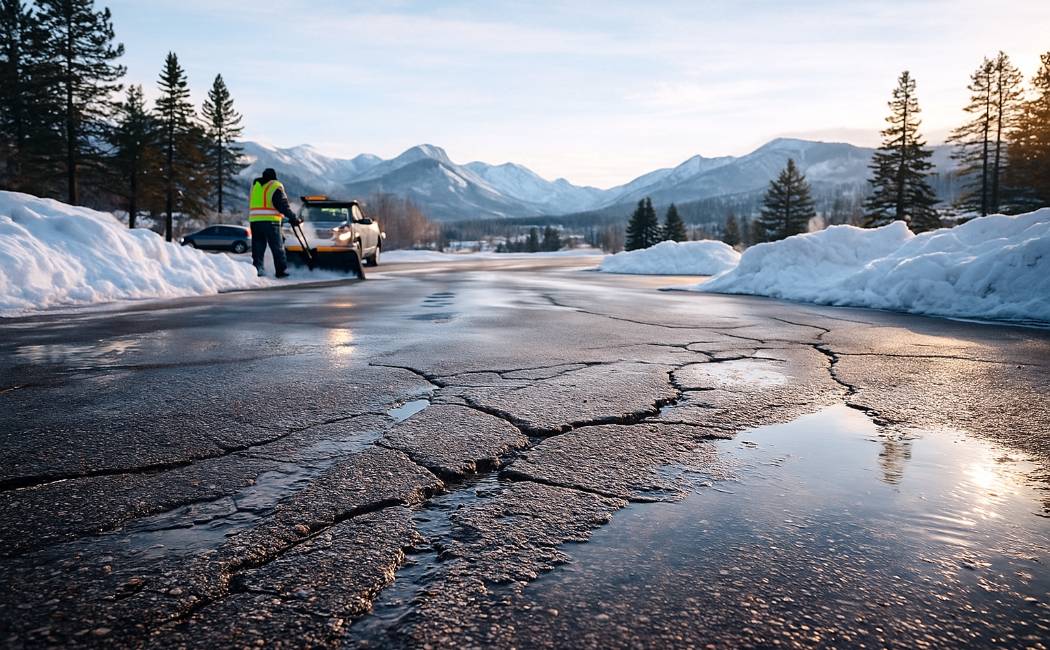
Colorado’s winter is a stunning mountain view, yet the cold temperatures can put strain on your asphalt driveways adn parking lots. With heavy snowfalls, rapid drop in temperatures, and the continuous freeze-thaw cycle, your property is severally affected.
With teh begining of winter, the homeowners notice the early signs of asphalt damage in winter that appear as surface cracking, but it ends up with growing potholes to drainage problems that form after snow begins to melt. In the beginning, these issues might appear harmless, but with time, as the problem becomes serious, it not only affects the appearance and property value but also becomes unsafe for drivers and pedestrians, increasing the risk of slips, falls, and vehicle damage.
Hence, asphalt maintenance in Colorado is essential throughout the winter season. With proactive care, professional snow removal, and the right preventive steps, property owners in Colorado can protect their asphalt pavements for years to come. By reading this article, you can get a thorough breakdown of exactly how winter weather affects asphalt, what signs to watch for, and how to prevent long-term damage.
How Snow and Ice Cause Asphalt Damage
Colorado has been blessed with a unique climate that changes rapidly. You may experience snowstorms one day, sunshine the next. This fluctuation accelerates wear and tear on asphalt surfaces in several ways.
Freeze-Thaw Cycles
The biggest contributors to asphalt damage in winter are the freeze-thaw cycle. Asphalt is naturally porous, but with temperatures dropping below freezing, that water turns to ice and expands. This expansion pushes outward, widening cracks and creating new fractures in the pavement.
When temperatures rise again, the ice melts and refills the cracks with water, beginning the cycle all over. These cycles can repeat dozens of times throughout the winter, causing small cracks to evolve into large ones and eventually forming potholes.
Heavy Snow And Ice Accumulation
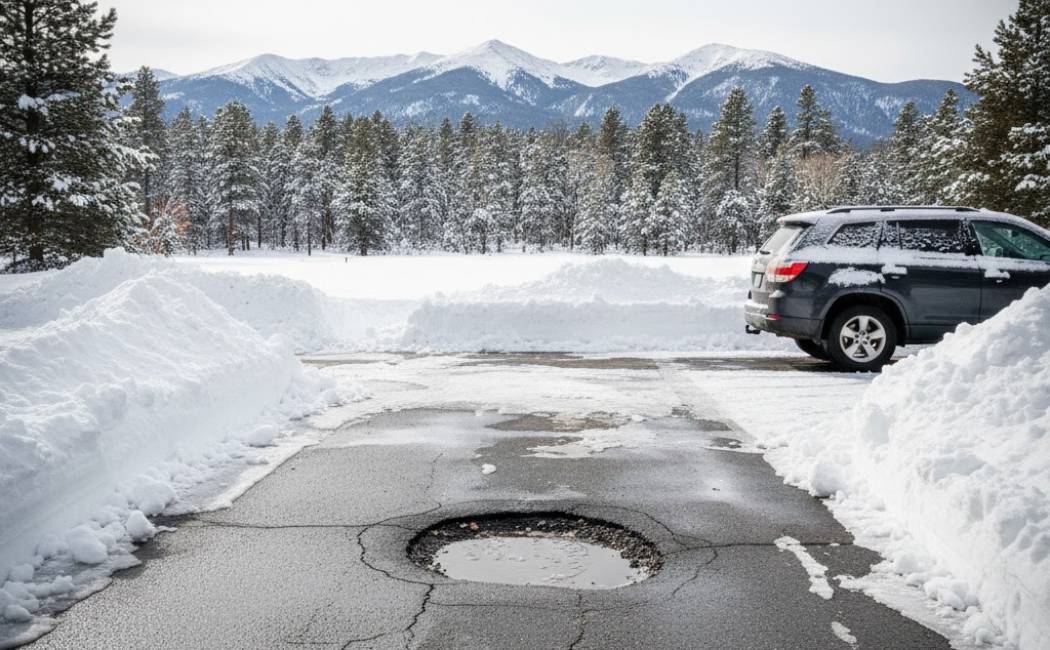
The overwhelming weight of snow can alone weaken the asphalt surface. Piles of snow in your driveways and parking lots add downward pressure to the asphalt surface, increasing the cracking and surface fatigue. On the contrary, in the commercial properties, where the snowploughs push the snow into large piles, the weight can contribute to depressions or uneven surfaces.
Snow piles are not the only concern. Ice buildup is even more problematic. If thick ice forms across the asphalt, it locks in moisture and prevents proper drainage. As temperatures shift, the underlying moisture causes further expansion, weakening the pavement from below.
Use Of Improper Deicing Chemicals
Some of the deicing chemicals available in the market contain harsh chemicals that break down asphalt binders more quickly. But also strip oils from the asphalt, causing it to dry out, crack, and crumble. Others seep into the pavement and speed up deterioration during freeze-thaw cycles. Some may seep deeper into the surface and accelerate the deterioration during freeze-thaw cycles.
Mechanical Damage From Shovels Or Plows
Using tools like metal snow shovels, steel blades on plows, or aggressive scraping techniques can gouge, scratch, or chip asphalt. Over time, these small imperfections expose the pavement to water penetration and winter weather, accelerating the damage.
On the other hand, commercial plowing equipment, if not handled properly, can also leave behind scrapes or cracks that expand as winter progresses.
Common Signs Of Asphalt Damage After Winter
After bearing months of snow, ice, and extreme temperatures, your asphalt pavements often show visible damage. Some of the most common issues include:
- Cracks: Appear small at first, but widen quickly when water freezes inside.
- Potholes: Formed by continuous freeze-thaw cycles that break asphalt apart.
- Uneven surfaces: Depressed or raised areas signal structural weakening beneath the pavement.
- Drainage issues: Melted snow may begin pooling due to shifting surfaces or clogged drainage paths.
- Damage to adjoining concrete sidewalks: Snow piling, shifting asphalt, and uneven expansion can cause cracks or lifting along sidewalks next to the asphalt.
If these issues aren’t addressed promptly, they worsen with each passing season, leading to expensive repairs that could have been prevented.
How To Prevent Asphalt Damage?
The finest way to protect asphalt from winter deterioration is by using proactive planning, professional maintenance, and snow removal techniques that keep the surface strong year-round.
Snow Removal By A Professional
Hiring professional snow removal services is an efficient way to prevent structural pavement damage. They use the proper tools, plow blade adjustments, and safe snow-handling techniques to avoid scraping or damaging the surface.
They also understand the efficient way of snow removal without creating hazardous snow piles that add unnecessary weight or obstruct drainage. This keeps your asphalt pavements safer and better protected throughout harsh weather.
Proper Deicing And Ice Melt
Not all deicers are created equal. Some contain chemicals like ammonium nitrate or calcium chloride, which can accelerate asphalt breakdown. Instead, opt for:
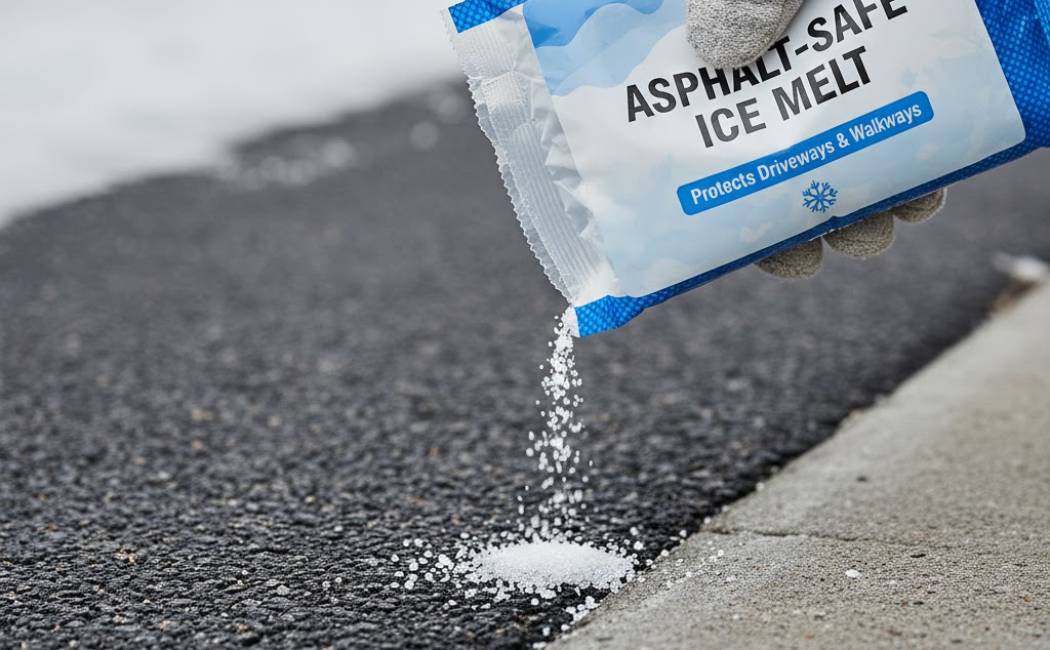
- Asphalt-safe ice melts
- Eco-friendly deicing products
- Products designed to minimize chemical erosion
While these alternatives may cost slightly more, they significantly extend the lifespan of driveways and parking lots.
Regular Maintenance And Filling Cracks
Preventive asphalt maintenance in Colorado should ideally take place before the first snowfall. Sealcoating protects the surface from moisture penetration, UV damage, and chemical exposure, acting as a protective barrier. Meanwhile, crack filling helps block water from entering small openings where it can freeze and expand.
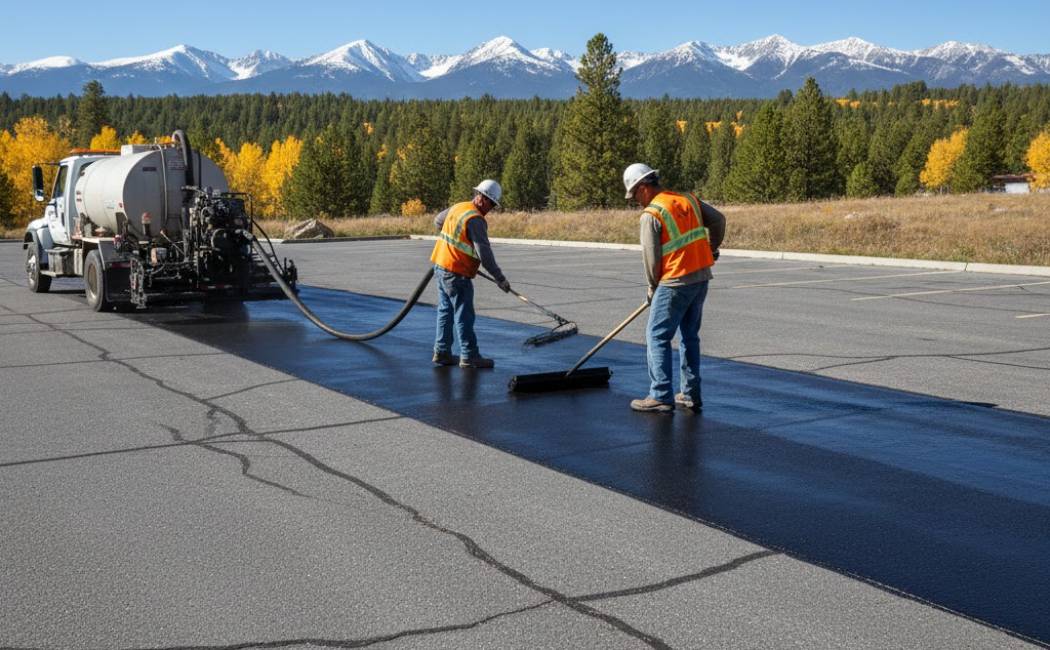
Routine maintenance such as patching, smoothing uneven surfaces, and cleaning drainage areas helps reduce the risk of winter damage dramatically.
Concrete And Sidewalk Protection
Asphalt and concrete expand and contract differently in winter temperatures. When one shifts more than the other, cracks or surface damage can spread between the two surfaces.
To protect the surrounding sidewalks:
- Prevent water from pooling near edges
- Avoid pushing snow piles against sidewalks or driveway borders
- Maintain proper grading to stop melted snow from flowing back toward the pavement
These small steps help keep both asphalt and concrete structures stable and damage-free.
Lasting Benefits of Asphalt Protection
Winter asphalt protection doesn’t just prevent damage, it adds long-lasting value to residential and commercial properties.
Long-term benefits include:
- Extended asphalt lifespan: Protected pavements last years longer than unmaintained surfaces.
- Lower repair costs: Winter damage is expensive; prevention is far more affordable.
- Increased safety: Smooth, well-maintained surfaces prevent slip hazards for pedestrians and reduce risk for vehicles.
- Improved appearance: Your driveway or parking lot maintains a clean, professional look.
- Better drainage: Proper maintenance ensures snowmelt flows safely away from the property.
Investing in winter asphalt care provides a strong return over time, especially in states like Colorado, where severe winter weather is a yearly reality.
Final Thoughts On Professional Asphalt Care & Snow Removal
Colorado winters are tough on driveways and parking lots, but with proper preparation and maintenance, you can prevent costly damage. From freeze-thaw cycles to chemical exposure and heavy snow loads, winter poses numerous threats, but professional asphalt care and safe snow removal practices make all the difference.
Protect your asphalt driveways and parking lots this winter. Contact our Denver Asphalt Experts for professional paving, repair, and snow protection services.