
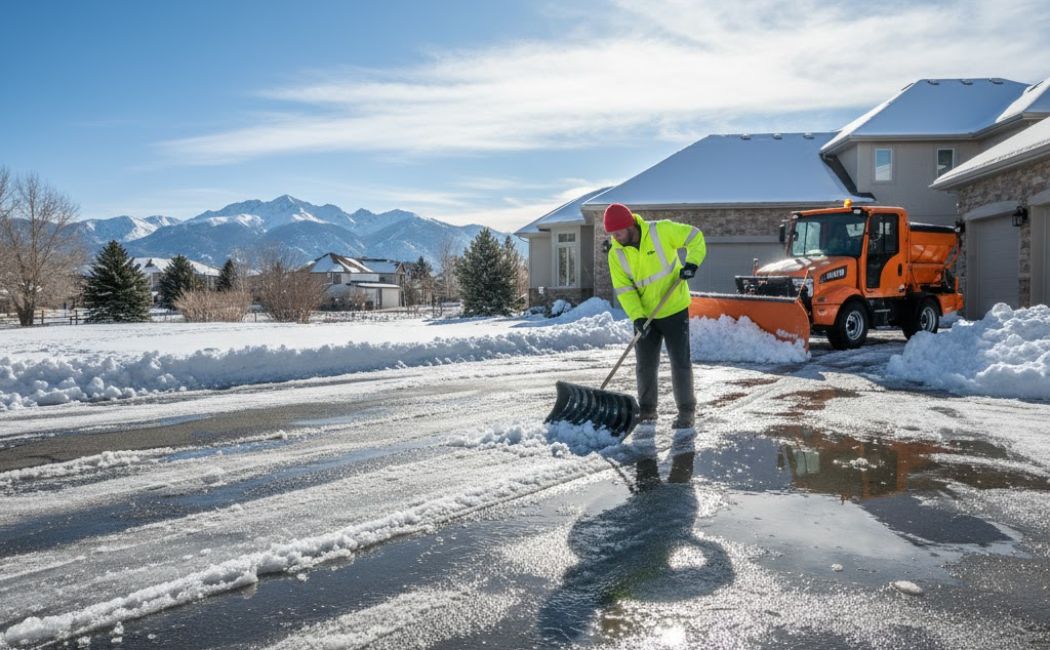
Do you really think winter is finally over? Well, not yet. If you are a citizen of Colorado, then you must already be aware that the spring sunshine of spring can quickly flip to a snowstorm overnight. Many businesses and homeowners pack away their snow gear way too early without thinking that late-season snow can be just as damaging, if not more, than mid-winter storms.
According to the National Weather Service, Denver’s last average measurable snowfall happens around late April, and in some years, you might see snowflakes in May. These unpredictable snowfalls often hit when asphalt and concrete are most vulnerable. Therefore, when the snow melts and seeps into the cracks, and refreezes overnight. This causes the expansion, which weakens driveways and parking lots.

For homeowners, property managers, and business owners, it’s not only about clearing the paths. It’s about protecting your investment. Late-season snow, combined with improper removal or neglect, can lead to potholes, edge crumbling, and costly spring repairs. In Colorado’s freeze-thaw climate, hiring professional snow removal services is not an option; it is an essential maintenance tactic that can save you thousands of dollars down the road.
Colorado’s Late-Season Snow: What “Late” Actually Looks Like
Colorado is famous for its weather; this state’s snow typically starts from October and lasts til April. But among all of these months, March and April remain the most snowy of all. This means that the heaviest snowfall occurs when people think that it’s over.
In the city of Denver, late-season snow is common through mid-to-late April. Aurora, Wheat Ridge, and Parker often see flurries well into May, while mountain towns like Breckenridge and Estes Park can experience snow as late as early June. According to data from Weather Spark and the National Weather Service, March can bring over 11 inches of snow on average, nearly double what falls in January
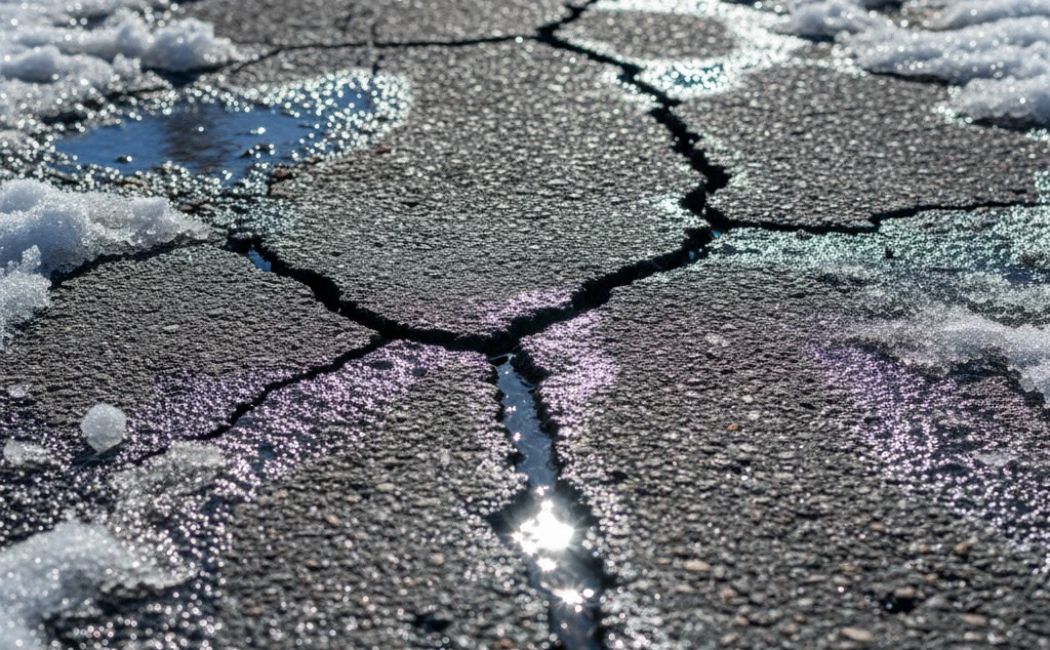
Spring storms bring heavy, wet snow that melts quickly during warm afternoons, then refreezes overnight. These freeze–thaw swings are brutal on asphalt and concrete, allowing water to seep into tiny cracks and expand them into potholes by the time summer arrives.
How Late Snow Harms Asphalt & Concrete
Melting snow might seem an easy task at first, but it’s complete chaos on your pavement. Furthermore, the real culprit in this whole situation is the freeze-thaw cycle.
When the temperature rises above the freezing point, the snow melts and seeps into the cracks and holes. However, when the temperature drops again at night, the trapped water freezes and expands up to 9% in volume. Each cycle widens the crack slightly until it becomes a visible gap or pothole.
Additionally, late-season snow intensifies the whole process because:
- The ground is already soaked from melting snow, leaving nowhere for water to drain.
- De-icing salts and chemicals can accelerate asphalt decay and corrode concrete.
- Softened surfaces are more easily scarred by plows or shovels.
- Rapid thawing causes pooling and drainage issues around curbs and seams.
This results in cracked edges, crumbling surfaces, and structural damage that can cost hundreds to thousands in spring repairs. What starts as minor cracking in March can become major potholes by May, all because snow removal was delayed or done incorrectly.
Common Mistakes That Can Make Problems Worse
Many owners try to save time and money by handling late-season snow removal themselves. Unfortunately, DIY clearing can make the damage worse, especially when done on thawing asphalt or recently sealed pavement.
- Using metal plow blades or shovels that scrape away protective sealcoating or leave gouges in soft asphalt.
- Plowing too close to curbs or edges, causing chipping and raveling.
- Overusing salt or calcium chloride, which eats away at asphalt binders and concrete finishes.
- Piling heavy snowbanks on pavement edges increases moisture seepage and undermines subbase support.
- Running heavy equipment over weakened surfaces, compacting and cracking the material below.
While these might seem like small missteps, their effects compound over time, leading to uneven surfaces, early deterioration, and higher long-term maintenance costs.
What Professional Snow Removal Does Differently
Hiring a professional snow removal company in Colorado isn’t just about convenience; it’s about protecting your property from preventable damage.
Here’s how pros do it differently:
- Calibrated plow blades: Rubber or poly edges reduce impact and prevent gouging.
- Pre-treatment strategies: Applying de-icing materials before a storm helps prevent bonding, making post-storm clearing easier.
- Post-treatment care: Controlled salt application to manage refreezing without chemical overuse.
- Efficient snow placement: Pushing snow to designated drainage zones, not onto asphalt edges.
- Responsive scheduling: Teams monitor local forecasts 24/7 and dispatch quickly to minimize snow compaction.
- Safety & liability coverage: Full insurance protects both property owners and the contractor.
At Asphalt & Concrete Services, our team’s services to Denver, Wheat Ridge, Aurora, Parker, and Longmont using professional-grade plows and de-icing equipment.
Checklist To Protect Your Pavement After The Last Snow
- Inspect for cracks or soft spots as soon as the snow clears.
- Patch potholes immediately to stop water intrusion.
- Flush drains and gutters to prevent pooling and erosion.
- Clean leftover salt and debris, which can stain and weaken surfaces.
- Schedule sealcoating 4–8 weeks after the last freeze (once temps stay above 50°F).
- Repaint stripes and curbs on commercial lots for visibility and safety.
Recommended timeline:
- Immediately after thaw: Inspection & cleaning.
- 1–2 weeks later: Patching and drainage checks.
- 1–2 months later: Sealcoating and restriping.
Pricing & Packages
Professional snow removal in Colorado is flexible and more affordable than many expect. Most providers offer several pricing models:
- Seasonal contracts: Flat rates for the entire snow season are ideal for commercial properties.
- Per-push or per-event pricing: Pay only when snow actually falls.
- Per-inch billing: Fair pricing based on actual snowfall depth.
A seasonal plan often provides the best long-term value, with priority response during storms and lower per-event costs. For homeowners, that means peace of mind. For property managers, it means consistent budgeting and reliable coverage even when Colorado’s weather throws surprises your way.
Call to Action: Protect Your Pavement Before It’s Too Late
Late-season snow may be unpredictable, but your response doesn’t have to be. Don’t wait for another surprise storm to take a toll on your driveway or parking lot.
Call (303) 810-0079 today to book your spring snow-removal assessment or request a free quote from Asphalt & Concrete Services.
Our local teams in Denver, Aurora, Wheat Ridge, Parker, and Longmont are ready to keep your property safe, dry, and damage-free from the last flurries of winter to the first warm days of spring.
Don’t let one last storm undo your hard work. Trust Colorado’s Snow removal experts to protect your investment.